Launch price $24.99 through October 15. Then $29.99.
SW Screens Without the Fight
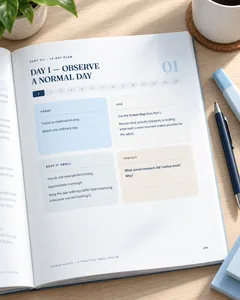
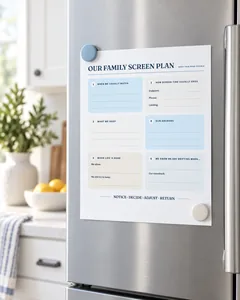
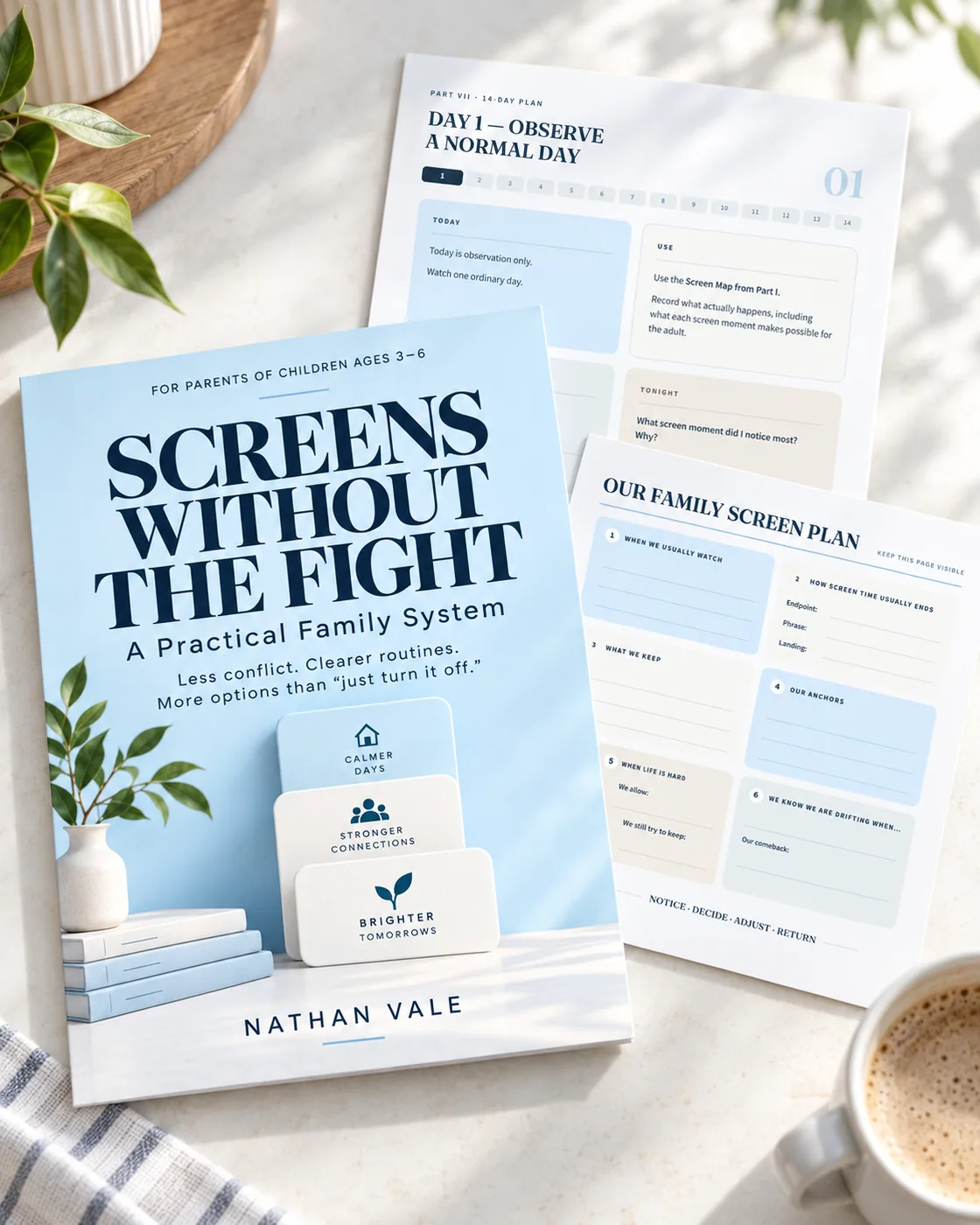
The guide open on a kitchen table next to the 14-day plan and the one-page family screen plan

For parents of children ages 3 – 6

Screens Without the Fight

A Practical Family System

Less conflict. Clearer routines. More options than “just turn it off.”

227 pages · 34 chapters · 14-day plan · 32 swap cards · 25 printable tools

$24.99 $29.99 Launch price

Launch price ends in

Get the Guide See inside the book

See what the screen is actually doing

Decide moment by moment, not by the clock

Make the ending a routine, not a negotiation

Give every caregiver the same plan

What’s inside

See the actual pages. Tap any set to open it larger.

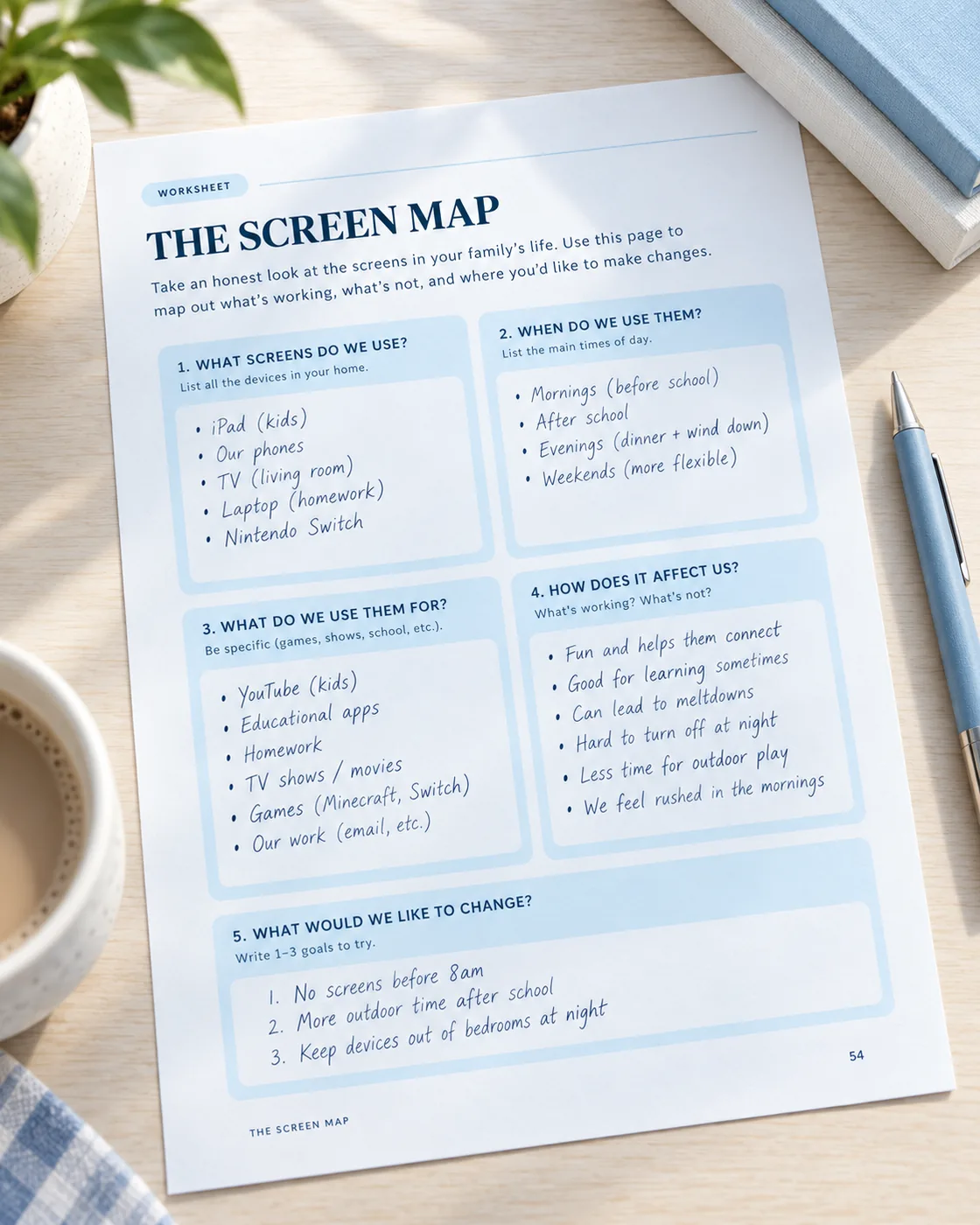
A filled-in Screen Map worksheet

The Screen Map

Page 1 of 4

What you get

The book, and the three things you actually hold in your hand

The guide explains the system. The rest of it is what you reach for at 6 p.m. on a Tuesday, when there is no time to look anything up. All four files download the moment you pay.

Screens Without the Fight 227 pages · 34 chapters · the 14-day plan · 17 printable worksheets
Screen Swap Cards · print edition 32 cards for the moments you usually reach for a screen. One situation each, with what to say, what to do instead, and what to watch for. Two per page, US Letter.
Screen Swap Cards · phone edition The same 32 cards, one per screen, with a tappable index. For the times the card you need is not the one on the fridge.
Quiet-Time Printables 8 activity sheets to print and hand over: color hunts, mazes, matching pairs, build-this. The thing many of the swap cards ask you to have ready.

No account, no app, no subscription. One payment, four PDFs, yours to keep and print as often as you like.

How it works

It does not start with a new limit.

Most advice tells you to count minutes. The number tells you how much, but it never tells you which moment to change. So this system starts somewhere else: for two days you write down what happens right before the screen goes on, and what it made possible for you. Then you decide, one moment at a time.

KEEP

This one works. It buys you something you need, and nothing about it is costing you. KEEP is permission to leave a good screen moment alone.

MOVE

Right thing, wrong moment. Same screen, thirty minutes earlier, and the evening stops falling apart.

SWAP

Something else can do the same job. The book gives you the filters for finding a swap that actually holds.

DROP

Nobody needs this one. It happens by habit, not because it does anything for anyone.

Then a 14-day rollout, one change at a time, with two observation days at the start and a written plan at the end that fits on a single page and lives on your fridge.

Where this comes from

You will always know which parts are research and which parts are mine.

This book separates what research supports from what I built, and it says on the page which is which. The back matter names each source with its limitation stated. Parenting advice about children should be able to show its work.

Evidence-supported

A named study or policy body supports this directly, and the wording stays inside the strength of the finding. Five sources, each cited with volume, issue and page.

Evidence-informed

Reasonable reasoning from the literature, where no source says this exactly. Phrased as reasoning, never as “research shows.”

Our framework

Screen Jobs, the four paths, the 14-day plan. My own structure for organizing what you see. Not clinical, not validated, and the book says so.

The 2026 AAP policy statement is in here, including the time frame this book argues against counting. Naming the number and then explaining why it does not tell you which moment to change is a stronger position than leaving it out.

About the author

Nathan Vale

I am not a pediatrician and this book never pretends otherwise. What I am is a parent who kept having the same fight at the same time of day, tried counting minutes, and found that the number never told me which moment to change.

So I started writing down what happened right before the screen went on. That notebook became the Screen Map, and the Screen Map became this book.

Questions

Before you buy

What exactly is this?

Four PDFs. A 227-page book in 34 chapters with 17 printable worksheets and a 14-day plan, 32 Screen Swap Cards in a print and a phone edition, and 8 quiet-time activity sheets for your child. You read the book on any device and print the pages you want to fill in. It is a complete system, not a checklist.

What is it not?

It is not a detox program, not a screen-time calculator, and not a list of healthy habits. It never asks you to hit a number. It is also not medical or psychological advice.

What ages is it for?

Written for families with children roughly 3 to 6. The observation method works at any age, but the examples, the scripts and the swap ideas are built for toddlers and preschoolers.

Do I have to count screen time?

No daily total to hit. You note the approximate length for context, but the plan is built on what happens before and after a screen moment, not on a number.

We are separated and share custody. Does this work?

Yes, and it is addressed directly. One household can run the plan on its own, and the one-page plan is built to be handed to the other home, a grandparent or a sitter without a conversation about who is right.

How much do I need to read before I can start?

Not much. The first step is to observe two ordinary days with the Screen Map, and that is explained in the first chapters. Everything after that builds on what you noticed, so you read the part you need when you need it.

What if I have more than one child?

The method still works. You map the screen moment you want to change and note which child, or which sibling pattern, is part of it. The swap cards say where a shared option works and where each child needs their own version.

What about screens used for communication or therapy?

Assistive and communication technology is not treated like entertainment. If a screen is part of your child’s communication, development or clinical support, follow the plan you have with the professional involved. This book is about the other kind of screen time.

How does delivery work?

The download opens in your browser the moment you pay, and a copy goes to the email address you enter at checkout. No account, no app.

How do I print the worksheets?

The worksheets are laid out for US Letter and come out of a home printer at full size. The same file reads on any screen.

Is this based on research?

In part, and the book tells you which part. Research findings and the frameworks I built are marked as what they are, and the back matter names each source with its limitation. The frameworks are mine and are labeled as mine.

Does this replace advice from your pediatrician?

No. If you are worried about your child’s development, sleep, behavior or wellbeing, talk to your pediatrician. This book is a practical system for everyday decisions, not a clinical tool.

What is the refund policy?

Read it, use it for 30 days, and if it did nothing for your household, write to us and we refund you. You keep the files. Full policy.

What if I lose my download link?

Enter your email on the order recovery page and the link is sent again. It works for as long as we are here.

A parent and child reading together in the evening, screens off

Screens Without the Fight

Start with two days of noticing. Everything else in the book follows from what you see.

$24.99 $29.99 Launch price

Launch price ends in

Get the Guide Already bought it? Find my order
$24.99 $29.99
Get the Guide